

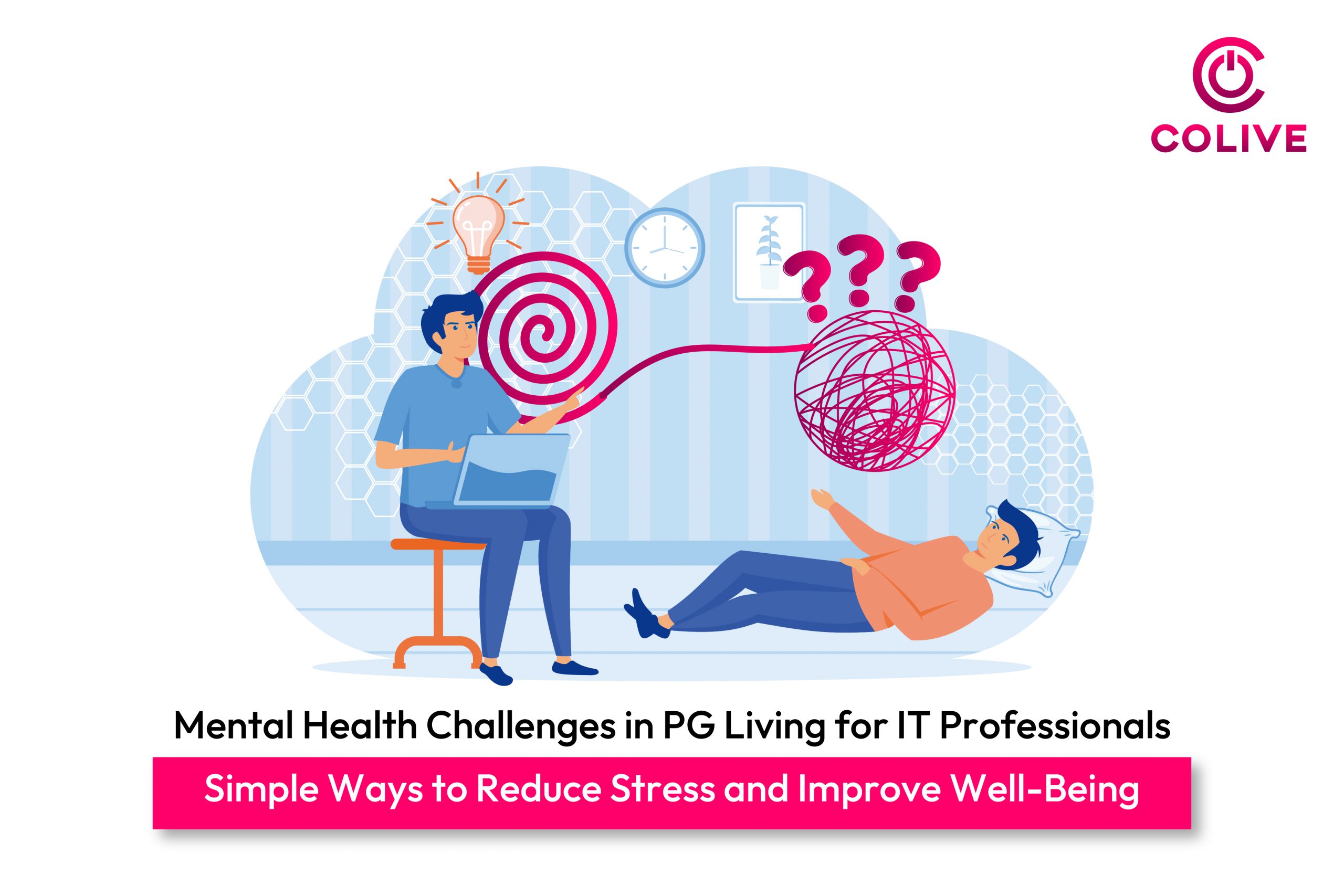
TLDR: IT professionals living in PGs often face mental stress due to noise, lack of privacy, unstable routines, and poor work–life boundaries. Choosing quieter, professionally managed PG or coliving spaces with predictable services significantly reduces burnout and improves focus.
Life in the IT industry is fast-paced, deadline-driven, and mentally demanding. Long screen hours, hybrid work schedules, and late-night calls already strain mental health. When these pressures combine with poorly managed PG or hostel living, stress levels rise quickly.
For many IT professionals staying in PGs in Bangalore, mental health challenges don’t appear immediately. They usually surface after the first month, once routines settle and daily friction becomes unavoidable. They usually surface after the first month, once routines settle and daily friction becomes unavoidable.
Understanding these challenges and knowing how to reduce them makes PG living far more sustainable in the long run.
Common Mental Health Challenges in PG Living for IT Professionals
1. Constant Noise in Sharing PGs
Noise from roommates, calls, TVs, and late-night movement affects sleep and concentration. Over time, this leads to fatigue, anxiety, and reduced productivity.This is especially common in high-density IT zones such as PGs near Manyata Tech Park, where late work hours and shared accommodations increase noise-related stress.
2. No Work–Life Boundary in PG Rooms
In PG accommodation, bedrooms often double as workspaces. Without physical separation, the brain struggles to disconnect, increasing burnout risk.
3. Lack of Personal Space
Overcrowded hostel-style PGs reduce privacy. For professionals who need downtime after work, this causes emotional exhaustion.
4. Unpredictable Daily Routines
Irregular food timings, inconsistent housekeeping, and unstable Wi-Fi disrupt structure. This unpredictability creates mental overload.
5. Isolation Despite Coliving
Even in coliving or sharing PGs, weak community interaction can cause loneliness, especially for first-time migrants.This phase is common among newcomers, and many residents relate to the experience of feeling homesick in a PG before they fully settle into shared living.
How PG Living Impacts Daily Work Performance
Mental stress from PG living directly affects:
- Focus during meetings
- Work-from-home productivity
- Sleep quality and energy
- Emotional stability
For IT professionals, small daily disturbances compound into long-term mental fatigue.This becomes even more noticeable for professionals working remotely or in hybrid setups, especially those staying in PGs in HSR Layout, where work-from-home routines demand quieter and more structured living environments.Living close to work hubs with better-managed accommodation reduces daily friction and improves overall productivity, which is why PGs near major IT hubs are preferred by working professionals.
How to Reduce Mental Stress While Living in a PG
1. Prefer Quiet-Friendly PG or Single Room Options
Single rooms or low-density PGs reduce noise and improve rest.
2. Create a Defined Work Zone
Even a small desk setup helps separate work and rest mentally.
3. Choose Predictable, Managed Accommodation
Managed PGs and coliving spaces provide stable routines, reliable internet, and quicker issue resolution.Asking the right questions before choosing a PG or co-living space can prevent many long-term issues related to stress and comfort.
4. Balance Social Interaction and Privacy
Healthy community spaces reduce isolation, while private rooms prevent burnout.
Why the Right PG Setup Matters More Than Rent
Choosing PGs only based on low rent often results in:
- Sleep disruption
- Poor hygiene
- Constant stress
While low rent looks attractive initially, understanding the actual PG rent in Bangalore helps professionals choose options that offer long-term comfort instead of short-term savings.
Professionally managed PG accommodation may cost slightly more but delivers mental peace, stability, and better work performance.This is commonly seen in busy IT corridors like BTM Layout, where professionals initially opt for budget PGs and later struggle with noise, overcrowding, and lack of routine.
Why Managed PGs Support Better Mental Well-Being
Managed PG and coliving spaces offer:
- Scheduled housekeeping
- Reliable Wi-Fi and power backup
- Clear rules and transparent pricing
- Secure access and on-ground support
This consistency removes daily uncertainty and supports long-term mental health.
Awards & Recognition
Colive has been recognized nationally for transforming managed PG and coliving spaces in India, with a strong focus on resident well-being.
- Udyog Rattan Award – Institute of Economic Studies
- Featured in The Hindu, Deccan Herald, Hans India, Business Standard
- Recognized by Inc42 for shaping modern urban housing
- Known for community-first, professionally managed accommodation
Colive’s commitment to professionally managed, resident-first living has been acknowledged across the industry, with multiple national recognitions highlighting its impact on modern PG and co-living spaces you can explore the full list on Colive’s Awards & Recognition page.
Final Thoughts
Mental health isn’t affected by work alone. Your living environment plays a critical role.
For IT professionals, choosing the right PG especially a quiet, well-managed, and predictable one can significantly improve focus, sleep, and emotional balance.
Mental comfort is not optional. It’s essential.
Frequently Asked Questions
1. Can PG living affect mental health?
Yes. Noise, lack of privacy, and unstable routines can increase stress and burnout.
2. Are single room PGs better for mental health?
Yes. Single rooms provide privacy and reduce noise-related stress.
3. How can IT professionals reduce stress in PGs?
By choosing managed PGs, maintaining routines, and avoiding overcrowded spaces.
4. Is coliving better than traditional PGs?
Coliving offers better structure, community balance, and professional management.
5. Does managed PG living improve work performance?
Yes. Stable services and quiet environments support productivity.
6. Is PG living suitable long-term for IT professionals?
Yes, if the PG is professionally managed and designed for working professionals.